27 November 2026
Save the date!
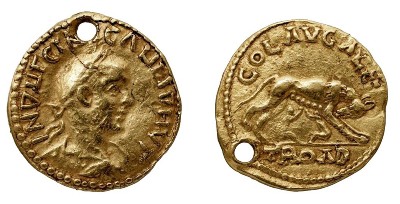
The origins of Germanic coinage have traditionally been traced to Western Europe in the early Middle Ages. Recent discoveries, however, paint a different picture: as early as the third century AD, coins were already being minted within the Gothic cultural sphere of East-Central Europe, particularly in what is now western Ukraine.
But how did the knowledge and techniques of coin production spread from the Roman provinces into the Barbaricum, the territories beyond the frontiers of the Roman Empire? Where did the metal required for minting come from? How were Roman coins adopted as models, imitated, and adapted? And what roles did these early locally produced coins play in societies beyond the borders of the Roman Empire?
These are the questions explored by archaeologist Aleksander Bursche in the 6th Heinrich Dressel Lecture, which will also serve as a commemorative lecture marking the centenary of Maria R.-Alföldi’s birth (1926-2022). Aleksander Bursche is internationally recognised as one of the leading experts on the multifaceted relations between Rome and the Barbaricum. His research has earned him numerous awards and distinctions.
The research projects Imagines Nummorum and Corpus Inscriptionum Latinarum, together with the Berlin Coin Cabinet cordially invite you to attend the lecture and the reception that will follow.
Please register at https://tinyurl.com/Dressel-Vorlesung.
Author: Ulrike Peter